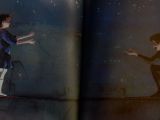
Mirette on the High Wire is a 1993 Caldecott Medal book. The water color is superb, yes, but what else calls for the number one (only one) award in the kids’ book world? Circus French girl written/conceived by an American woman? Well, I got a thought. Flash back to 1992 and the capital F of Feminism… Continue reading
Filed under Essays on Picture Book …
Frog and Toad are Friends, 1970
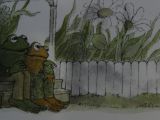
This, my friends, is Frog and Toad are Friends, written in 1970, the first in a series of three by Arnold Lobel. Why do I like this book? First and foremost: Toad. He’s the sort of character who is all too comfortably endearing. He’s Eeyore to Poo, he’s Jack to Algernon, he’s Cameron to Ferris Bueller. He’s grumpy, gullible, and self-defensive, he’s your sadly loveable grandfather and your childhood best curmudgeon friend all rolled into one. He wears striped, full body bathing suits and wool jackets, and he sleeps a lot. Continue reading
Mudkin, 2011
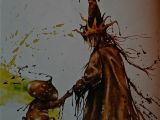
It’s easy to unabashedly adore Mudkin. There’s few words. Typically exhilarating splashes of Gammel color images (he can squeeze tons of colors, even out of mud). The unpretentious queen, her little blobby and indecipherable friend, Mudkin, and all the mud people in their kingdom of mud. Continue reading
Epic, Allsburg, and The Art of the Story-Teller
Oral story-telling is in the throes of a long, drawn out death, one which it began decades, even centuries ago, well before most of us were born. And though we do not mourn that fact, we should. Continue reading
A Dance for Three, 1979
Ann Schweninger’s A Dance for Three (title “story” shown above) is a collection of 3 wordless tales. Key word: simple. And you could throw fanciful in there. But not straightforward. Definitely not straightforward. Continue reading
Quick Question for the Controversial Classics
We are a culture of consensus (just look at the power invested in Yelp), and “the classics”– books that are assumed to better than all other books via their perseverance through time– are an attractive place to start looking for good books. There already exists a vague sense for the illustrated classics– think Where the Wild Things … Continue reading
Kick off: what makes a picture book good, besides the pictures?
Alright. This mission to steal back the illustrated book needs a kick-off. As well as some parameters and some caveats for this whole idea that these books are worth reading. So to break it down, this is where I see the success of a kid’s book. Simple, yes. Simplistic, no. Instructive, most likely. Pedantic, definitely not. Always bigger than itself, always asking for your imagination to fill in the blanks, asking you to put yourself in there, and never telling you how. And most importantly… never trite or overly sentimental. It basically comes down to: if you can read it now as a “grown up”, not throw up in your mouth, and leave it feeling like a better person, it’s doing something right. Of course, how that all goes down… well, that’s what we get to look at from here on in. Continue reading