The Owl and the Pussycat is the best nonsense poem of all time. Edward Lear’s nonsensical words gently undercut a sentimental story, balancing romance with frivolity, sense with nonsense, adventure with security, and the result is a story whose perfect meter and easy rhyme lull one to a state of blissful conviction that, yes, the world could be lovely if only it were full of owls and pussycats. Continue reading
Filed under The Illustrated Classics …
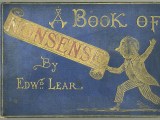
A Homage to Edward Lear
This posting is long overdue. Yet perhaps no time is the right time to pay homage to a man who births brilliance from sadness. Edward Lear, impoverished epileptic, clownish artist, misfit bumbling socialite, endearingly teary-eyed poet, and above all, a man whose name should ring out side by side with Lewis Carroll, but very rarely does. Continue reading
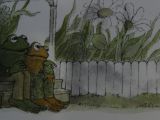
Frog and Toad are Friends, 1970
This, my friends, is Frog and Toad are Friends, written in 1970, the first in a series of three by Arnold Lobel. Why do I like this book? First and foremost: Toad. He’s the sort of character who is all too comfortably endearing. He’s Eeyore to Poo, he’s Jack to Algernon, he’s Cameron to Ferris Bueller. He’s grumpy, gullible, and self-defensive, he’s your sadly loveable grandfather and your childhood best curmudgeon friend all rolled into one. He wears striped, full body bathing suits and wool jackets, and he sleeps a lot. Continue reading
The Wonderful Wizard of Oz, 1900 and 2009
Rightly you might say that The Wizard of Oz doesn’t quite fit into the “picture book” world we’ve got going here. Yes, it does have pictures, and yes, it is for kids. But the words vastly outweigh the pictures, and the witch is too scary for a wee child (she was my first recurrent nightmare … Continue reading
In the Night Kitchen, 1970
So, what’s great about Sendak’s next best known book? His second little dark haired hero, Mickey, falls into a surreal bakers’ world and saves the day by flying a dough plane to a giant milk bottle and getting the bakers the milk they need for the morning cake. Again, as in Where the Wild Things Are, imagination takes a boy to a world outside of his own. But this one’s got a slightly different kind of ending… Continue reading
Where the Wild Things Are, 1963
When you read criticism on Maurice Sendak’s first hugely successful book (and there are academic essays, I assure you), you realize, holy shit, people have applied phrases like “colonialist or Freudian prism” and “the psychoanalytic story of anger” to this tail of an angry boy who sails to where the wild things are. This isn’t the first place that Where the Wild Things Are has been treated as a book whose readership has no age limits. Continue reading
Maurice Sendak, genius extraordinaire
Over the last five decades, Maurice Sendak has been the genius behind innumerable picture books, some of which have reached the status of irrefutable classics. Indeed, today Sendak is one of the most recognized names in illustrated children’s books. Born in Brooklyn in 1928 to Polish Jewish immigrants, he knew by the age of 12 that he wanted to be an illustrator. Continue reading
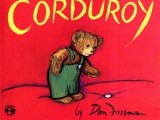
Corduroy by Don Freeman, 1968
So, in my intention to initially look at some of the “classics” of the illustrated world, I had wanted to bring Corduroy into the mix. But sadly, in revisiting the little bear many years later, the truth of the matter is that Corduroy ain’t what I remembered him to be. Now, no need to totally rip Corduroy apart, he obviously can have his positive effect on kids. We can say he belongs to a time and a place– but that time and that place does not jibe with my adult sensibilities. Continue reading
Johnny Crow’s Garden by L. Leslie Brooke, 1903
1903… it’s an old one, and one that has obviously appealed to reader’s for a very long time. Published over and over again for over 70 years, Johnny Crow’s Garden doesn’t seem to be enjoying quite the popularity it once had. Perhaps now thought to be somewhat archaic (for the style of the drawings?), this awesome little picture book brings back a time of yore, both in style and in sentiment. What goes beyond the illustrations, however, is an act of pure, indulgent nonsense masking a fairly straight-forward social commentary. Continue reading
The Giving Tree by (the one and only) Shel Silverstein, 1964
The Giving Tree deals with that issue that no one can or really wants to avoid, not even Poe or monster robots: the inexhaustible conundrum that love can hurt. And here, with his simple, sweet, yet somehow mildly grotesque little line drawings, Silverstein looks at the pure side of that pain, and lets his reader do the hurting. Continue reading