The Owl and the Pussycat, 1871

The Owl and the Pussycat, 1871

The Owl and the Pussycat is the best nonsense poem of all time. Edward Lear’s nonsensical words gently undercut a sentimental story, balancing romance with frivolity, sense with nonsense, adventure with security, and the result is a story whose perfect meter and easy rhyme lull one to a state of blissful conviction that, yes, the world could be lovely if only it were full of owls and pussycats. Continue reading

A Homage to Edward Lear

A Homage to Edward Lear

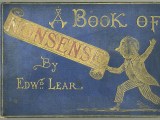
This posting is long overdue. Yet perhaps no time is the right time to pay homage to a man who births brilliance from sadness. Edward Lear, impoverished epileptic, clownish artist, misfit bumbling socialite, endearingly teary-eyed poet, and above all, a man whose name should ring out side by side with Lewis Carroll, but very rarely does. Continue reading

Frog and Toad are Friends, 1970

Frog and Toad are Friends, 1970

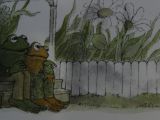
This, my friends, is Frog and Toad are Friends, written in 1970, the first in a series of three by Arnold Lobel. Why do I like this book? First and foremost: Toad. He’s the sort of character who is all too comfortably endearing. He’s Eeyore to Poo, he’s Jack to Algernon, he’s Cameron to Ferris Bueller. He’s grumpy, gullible, and self-defensive, he’s your sadly loveable grandfather and your childhood best curmudgeon friend all rolled into one. He wears striped, full body bathing suits and wool jackets, and he sleeps a lot. Continue reading

Mudkin, 2011

Mudkin, 2011

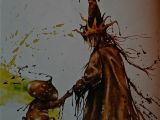
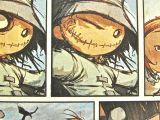
It’s easy to unabashedly adore Mudkin. There’s few words. Typically exhilarating splashes of Gammel color images (he can squeeze tons of colors, even out of mud). The unpretentious queen, her little blobby and indecipherable friend, Mudkin, and all the mud people in their kingdom of mud. Continue reading

Old Black Fly, 1992

Old Black Fly, 1992

Jim Aylesworth’s story and Stephem Gammels illustrations make Old Black Fly one of the better themed abecedarian books I’ve seen. It’s a straightforward story: Old Black Fly has been having a very busy day being bad; he does all sorts of badness; then, justice comes, he gets swatted, and “he won’t be bad no more.” Written in a song-like, rhythmic kind of way, complete with rhyme and the oft repeated “Shoo fly, shoo fly, shoo”, it begs to be read aloud in that slow way of an old man sitting on a hot porch, listlessly waving his hand at a fly buzzing round his head. The tone makes the SWAT! at the end particularly effective. But then, it’s right back to the slow tone that eclipses the messy undoing of an evil, dirty fly. Continue reading

King Bidgood’s in the Bathtub, 1985

King Bidgood’s in the Bathtub, 1985

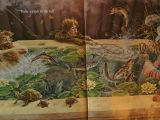
If academics had a hard time with the naked Mickey yelling Cock-a-doodle-doo in In the Night Kitchen, what would they say to a kid’s book where all the adults get into the bathtub together? What exactly would they conclude from a big, hairy, naked king jovially commanding all of his subjects to conduct their business with him–fishing, eating lunch, having masquerade balls, planning battles– in the bubbly waters of his bath? Continue reading